
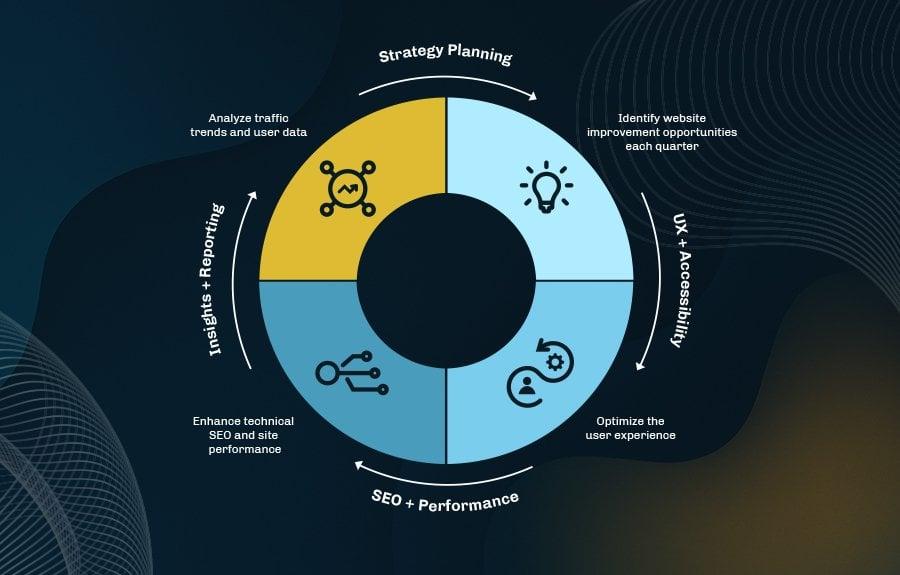
Search Experience Optimization (SXO) is rapidly becoming one of the most important strategies in digital marketing. While traditional SEO focused primarily on improving rankings and increasing organic traffic, today’s search landscape requires a more user-centric approach. Search engines now evaluate not only how well a page ranks but also how effectively it satisfies user intent and delivers a positive experience. As a result, businesses must combine SEO, user experience (UX), and conversion optimization to remain competitive. This shift has made SXO a critical component of long-term digital success.
What Is Search Experience Optimization?
It is the practice of improving both a website’s search visibility and the overall experience users have after clicking on a search result.
Unlike traditional SEO, which focuses heavily on rankings, SXO focuses on the complete user journey.
Search Experience Optimization combines:
- Search Engine Optimization (SEO)
- User Experience (UX)
- Conversion Rate Optimization (CRO)
- Search Intent Optimization
The ultimate goal is to attract the right audience and help them achieve their objectives efficiently.
Why Search Experience Optimization Matters in 2026
Digital marketing has evolved significantly over the past few years.
Today, users expect:
- Fast-loading websites
- Mobile-friendly experiences
- Clear navigation
- Helpful content
- Personalized interactions
Consequently, Google rewards websites that provide better experiences.
Therefore, businesses that invest in SXO often experience:
- Higher engagement
- Better rankings
- Lower bounce rates
- More conversions
Search Experience Optimization vs Traditional SEO
Many marketers assume that SXO and SEO are identical. However, there are important differences.
| Factor | Traditional SEO | Search Experience Optimization |
|---|---|---|
| Focus | Rankings | Rankings + User Experience |
| Goal | Traffic | Traffic + Conversions |
| Metrics | Clicks | Engagement |
| Priority | Search Engines | Search Engines and Users |
| Outcome | Visibility | Business Growth |
Simply put, SEO helps users find your website, while SXO helps users stay and convert.
Core Elements of an Effective Search Strategy
Search Intent Optimization
Search intent refers to the reason behind a user’s search.
There are four primary types:
- Informational
- Navigational
- Commercial
- Transactional
When content aligns with search intent, users are more likely to engage and convert.
User Experience Optimization
User experience plays a major role in User-centric SEO.
Important factors include:
- Mobile responsiveness
- Site speed
- Navigation
- Accessibility
- Readability
As a result, better experiences often lead to better rankings.
Content Optimization
Content remains the foundation of successful digital marketing.
However, content must now focus on:
- Solving problems
- Demonstrating expertise
- Answering questions
- Providing actionable insights
Furthermore, content should be easy to scan and understand.
Conversion Rate Optimization
Traffic alone does not generate revenue.
Therefore, SXO incorporates CRO strategies such as:
- Clear calls-to-action
- Optimized landing pages
- Lead generation forms
- Trust signals
These elements help transform visitors into customers.
How Google Supports Search Experience Optimization?
Google’s algorithms increasingly prioritize user satisfaction.
Several updates have reinforced this approach, including:
- Helpful Content Update
- Core Web Vitals
- Mobile-First Indexing
- AI-Powered Search Experiences
Consequently, businesses must focus on delivering value rather than simply targeting keywords.
Search Experience Optimization and Core Web Vitals
Core Web Vitals are important performance metrics that directly impact user experience.
Largest Contentful Paint (LCP)
Measures loading speed.
Interaction to Next Paint (INP)
Measures responsiveness.
Cumulative Layout Shift (CLS)
Measures visual stability.
Optimizing these metrics supports a stronger Search Experience Optimization strategy.
Common Search Experience Optimization Mistakes
Many businesses unknowingly make mistakes that hurt performance.
Ignoring Mobile Users
Mobile traffic continues to dominate online searches.
Slow Website Performance
Users expect pages to load quickly.
Poor Navigation
Complex website structures create friction.
Weak Content
Content should provide genuine value rather than simply targeting keywords.
No Clear Call-to-Action
Users should always know what step to take next.
How to Implement an Effective SXO Strategy?
Implementing SXO does not require a complete website redesign.
Instead, businesses can start by:
Improving Website Speed
Optimize images and reduce unnecessary code.
Matching Search Intent
Create content based on what users actually want.
Strengthening Internal Linking
For example:
- SEO Services Guide
- AI in Digital Marketing
- Future of Digital Marketing
- Zero-Click Searches
Enhancing User Experience
Focus on readability, navigation, and accessibility.
Optimizing Conversion Paths
Guide visitors toward meaningful actions.
Benefits of a User-Centric SEO Strategy
Businesses that embrace Search Experience Optimization often achieve:
Better Search Rankings
User-focused websites perform better over time.
Higher Engagement
Visitors stay longer and explore more pages.
Increased Conversions
Optimized journeys improve business outcomes.
Improved Brand Trust
Positive experiences build credibility.
Future-Proof Marketing
SXO aligns with evolving search trends and AI-powered experiences.
The Future of User-Centric Search Strategies
The future of digital marketing will revolve around experience.
Emerging trends include:
- AI-powered search
- Conversational search
- Personalized experiences
- Voice search
- Search Experience Optimization
Therefore, businesses that prioritize user satisfaction today will gain a significant advantage tomorrow.
Key Takeaways
| Search Experience Optimization Element | Benefit |
|---|---|
| Search Intent | Better relevance |
| UX | Improved engagement |
| Content Quality | Greater authority |
| CRO | More conversions |
| Core Web Vitals | Better performance |
| Internal Linking | Improved navigation |
| User Satisfaction | Long-term growth |
Frequently Asked Questions
What is Search Experience Optimization?
It is a strategy that combines SEO, UX, and CRO to improve rankings, engagement, and conversions.
How is Search Experience Optimization different from SEO?
SEO focuses primarily on rankings and visibility, while SXO focuses on visibility, experience, and business outcomes.
Why is Search Experience Optimization important?
It helps businesses improve user satisfaction, increase conversions, and achieve sustainable growth.
Does Google consider user experience a ranking factor?
Yes. Google evaluates factors such as page speed, mobile usability, and Core Web Vitals.
Is Search Experience Optimization the future of SEO?
Many experts believe SXO represents the natural evolution of SEO because it prioritizes both users and search engines.
Conclusion
SXO is no longer a future concept—it is a present-day necessity. As search engines become more sophisticated and user expectations continue to rise, businesses must move beyond rankings and focus on delivering meaningful experiences. By combining SEO, UX, content quality, and conversion optimization, SXO helps create websites that not only attract visitors but also engage and convert them. Organizations that adopt this approach today will be better prepared for the future of digital marketing.